19-20 November 2026 at Copenhagen University
Hosted by SatiReNet
(3-year explorative research network funded by Independent Research Fund Denmark)
The deadline to submit your abstract is 31 August 2026
Submit abstractRegistration for the conference opens 1 September 2026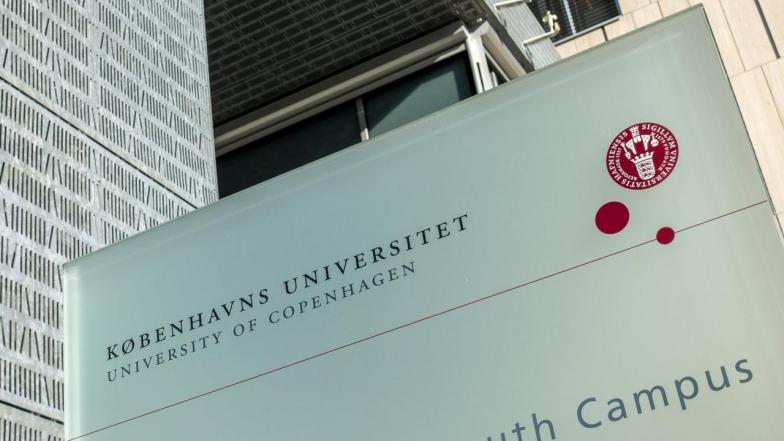
Satire controversies are no longer an occasional disturbance in the public sphere. They have become a recurring mode through which contemporary societies negotiate disagreement about humour, harm, and freedom of expression – and, increasingly, about truth and political legitimacy. From the Alan Kurdi controversy to White House memes, the field of satirical conflict has grown both more visible and more difficult to map within established theoretical frameworks. This conference invites contributions that engage with the complexity of contemporary satire and of these controversies.
Relevant questions we will discuss could be: Why have satire controversies become a recurring feature of public life rather than exceptional events? What can earlier controversies reveal about those of the present, and where do the continuities end? When a satirical work tips into conflict, is the dispute really about the work itself? Which inherited concepts (of intention, offence, authorship etc.) strain under contemporary conditions, and what might take their place? When is “satire” a description of a work, and when is it a claim made strategically about it? And with what consequences do these conflicts end — for careers, legislation, and the limits of the sayable?
We welcome proposals across the following tracks:
Contemporary satire controversies. How does interpretive divergence shape the trajectory of controversy? Through which dynamics do controversies emerge, escalate, and dissipate – and why does even sharply polemical satire sometimes provoke no controversy at all?
The polemical force of contemporary satire. How do specific works of satire attack, expose or delegitimise their targets? When does a work’s critical edge advance a debate, and when does it merely harden existing positions?
Satire in the age of generative AI. How do generative tools (deepfakes, voice cloning etc.) transform satire’s capacity to wound or the way satire controversies unfold? What happens when photorealism erases caricature’s signal of its own artifice?
Satire produced by states, governments, party-political actors, and other institutions of power. What happens to the satirical contract when the satirist is also the sovereign? How is regime-sponsored mockery received and to what extent is it controversial?
Cases where the satirical label is invoked or feigned – from fabricated satirical works in disinformation campaigns to the ‘just a joke’ defense. How do actors exploit satire’s cultural legitimacy for ends foreign to it? And what distinguishes such appropriation from satire’s own strategies?
Within each of these tracks, proposals may take historical cases as their point of departure, provided they explicitly relate them to contemporary cases or tendencies. We welcome contributions from across humour studies, art and cultural studies, media studies, sociology, political theory, and adjacent fields. Comparative and transnational perspectives are especially encouraged.
Proposals of up to 300 words for 20-minute papers should be submitted, together with a bio blurb of up to 50 words, by 31 August 2026.
References:
Modioli (2020) “Cartoon Controversies at the European Court of Human Rights: Towards Forensic Humor Studies”, Open Library of Humanities 6 (1): 1–35.
Koivu Koski et al. (2026) “The rise in humor scandals: a cross-national comparison of humor-related public controversies in eight European countries (1990–2022)”, Humor 39 (1): 95-126.
Lockyer & Weaver (2024) “The Ethics of Humor and Comedy,” Ford et al. (ed.), The De Gruyter Handbook of Humor Studies, vol. 2, p. 539–556. Berlin/Boston: De Gruyter.
Key dates:
31 August 2026: Abstract submission deadline
End of August 2026: Decision notice
1 September 2026: Registration for the conference opens
30 September 2026: Deadline for signing up for the conference
19-20 November 2026: Conference dates (09:00-17:00 both days)
Conference venue:
Faculty of Humanities
Copenhagen University, South Campus
Karen Blixens Vej 8
2300 Copenhagen S, DK
Expenses:
All participants must pay for their own travel and accommodation.
There will be no registration fee, and food and beverages will be provided at the conference.
A conference dinner will be held and requires separate registration.
Organisers:
The conference is organised by the Explorative Research Network SatiReNet, headed by Associate Professor Ida Klitgård (Roskilde University), Associate Professor Michael Eigtved and Post Doc. Dennis Meyhoff Brink (University of Copenhagen).
It is funded by Independent Research Fund Denmark.
SatiReNet website: https://ruc.dk/en/forskningsprojekt/satire-research-network
Call for Papers: Drone Journalism, Satellite Imagery, and Visual Investigations from the Air
Imagery captured by drones and satellites is increasingly expanding visual reporting and airborne investigations in the news media, especially from...